
Exhibit B · Section 4
Strategic drones from Bahir Dar Air Base
Sudan has been attacked not only by expendable drones, but by armed strategic drones of a class that only States possess. They flew from Bahir Dar Air Base, an installation of the Ethiopian National Defence Force.
Bahir Dar Air Base
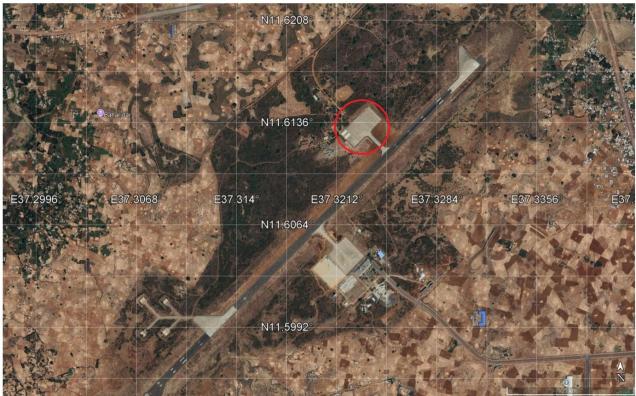
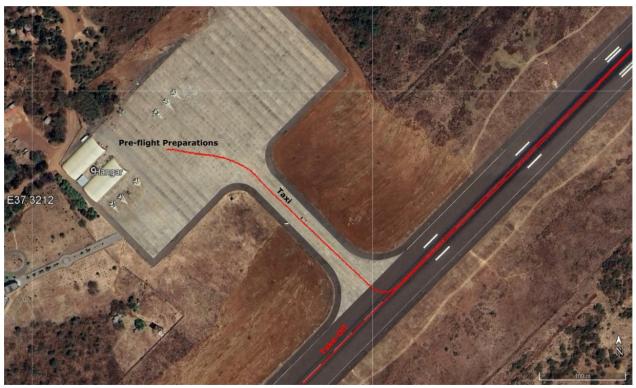
Bahir Dar, on the southern shore of Lake Tana in the Amhara Region, hosts an Ethiopian Air Force base used for armed-drone operations. Satellite imagery reviewed by Sudan identifies the apron and hangars from which the strategic drones were prepared, the taxi route and the take-off runway.
The El Obeid interception, 17 March 2026
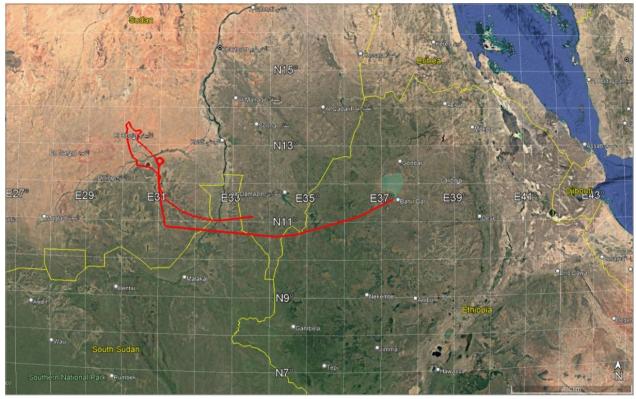
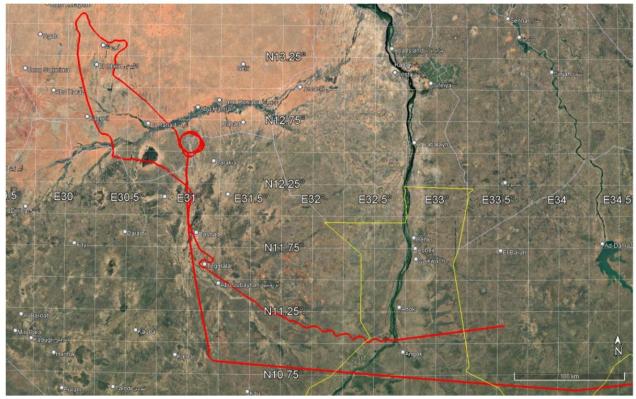
On Tuesday 17 March 2026 Sudanese air defences brought down a Bayraktar Akıncı strategic drone near El Obeid, the capital of North Kordofan. Data recovered from the aircraft showed that it had been launched from the Bahir Dar area, on 1 and 17 March, to strike positions in several Sudanese states.12 The reconstructed track reveals the method: the aircraft flew west across Blue Nile State, entered the airspace of South Sudan to skirt Sudanese air defences, and then turned north through Kordofan to its targets, a route of about 1,000 km planned by a professional air-operations staff.
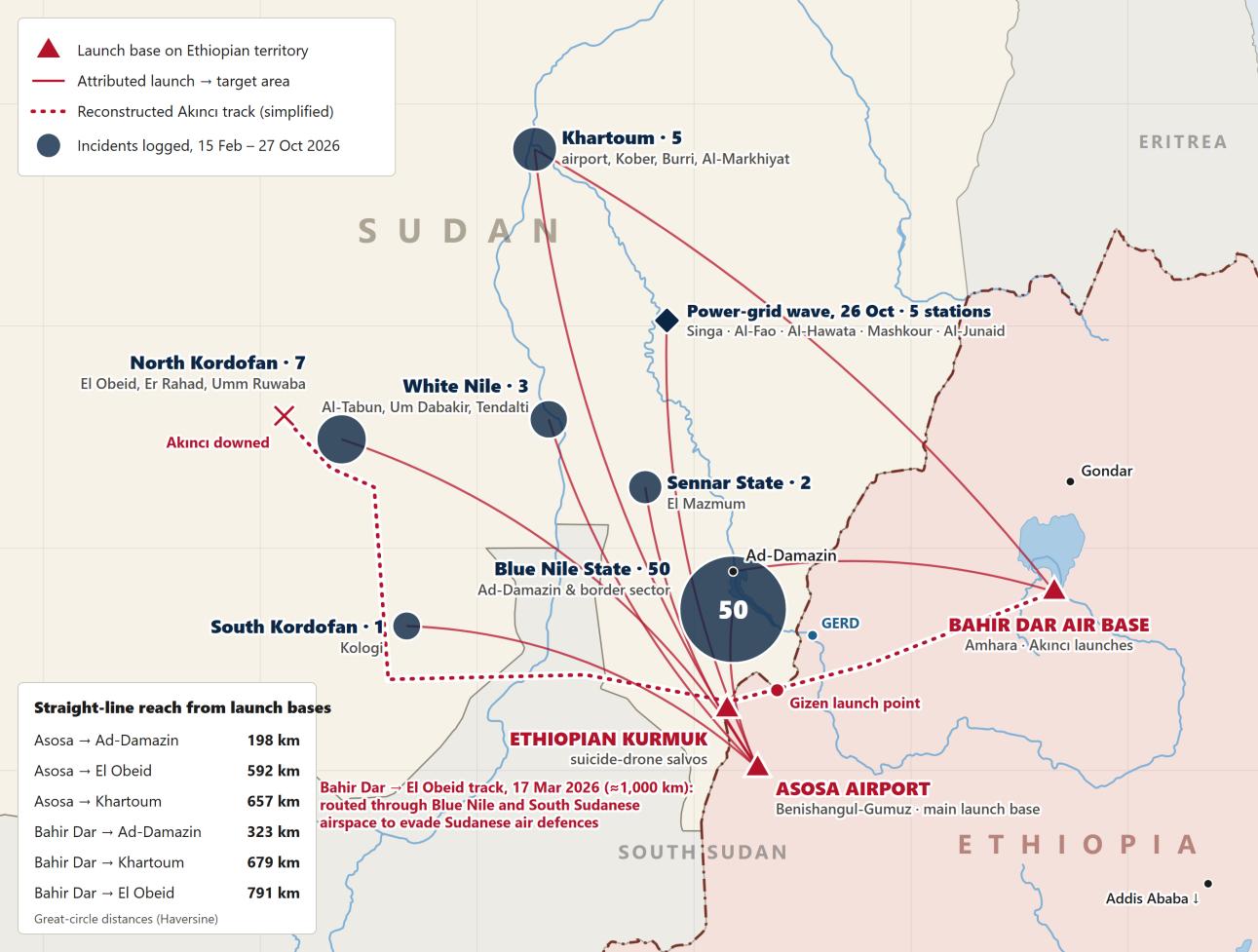
The Ad-Damazin interception, 23 May 2026
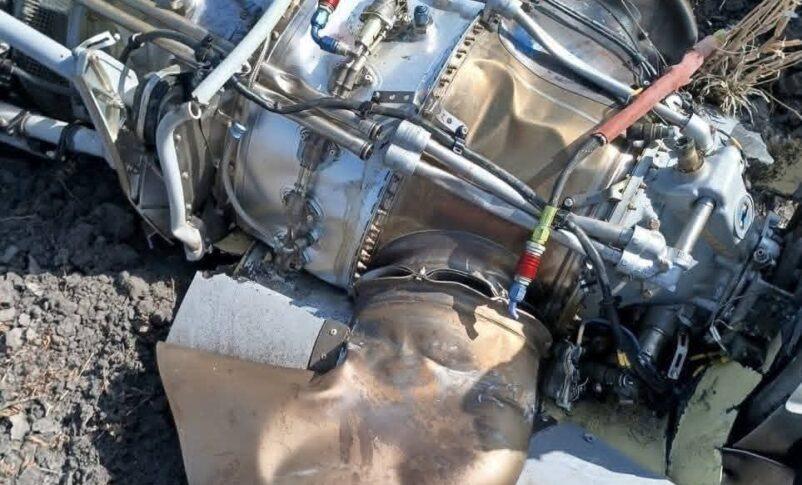
On Saturday 23 May 2026 a second Akıncı was brought down near Ad-Damazin, about 75 km from the Ethiopian border, after entering Sudanese airspace from Ethiopia. It was intercepted by a Sudanese Akıncı.13 Its engine, satellite communications equipment and avionics were recovered.

Serial-numbered components
The wreckage carries manufacturer data plates. Each bears the NATO Commercial and Government Entity code T9710, a part number and an individual serial number. One plate carries a NATO Stock Number with the country code 27 (Türkiye). These identifiers allow the manufacturer and the exporting State to establish, from their own records, the airframe to which each component belongs and the customer to which it was delivered.
| Component (as labelled) | Part number | Serial number | NCAGE | Recovered at |
|---|---|---|---|---|
| Panel, Control, Type 2 (Gövde Yan) | 131100056 | 241200054 | T9710 | El Obeid, 17 Mar |
| Computer, Navigation (Bilgisayar, Seyrüsefer) | 134600002 | 250100140 | T9710 | El Obeid, 17 Mar |
| Air Data Terminal Unit Set, Link B2 (HVT) | 143100084 | 231200572 | T9710 | El Obeid, 17 Mar |
| Central Unit, Airborne Radio (Kontrol Ünitesi) | 143100953 | 250200003 | T9710 | Ad-Damazin, 23 May |
| Transceiver Unit, Link B3, Airborne | 10-1108010100 | 240400695 | T9710 | Ad-Damazin, 23 May |
| Communications unit (Aselsan) | - | - | - | El Obeid and Ad-Damazin |
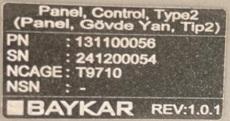
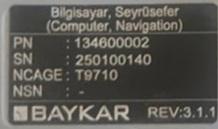
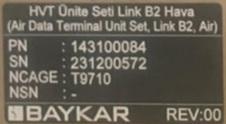
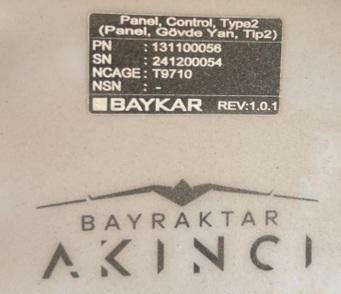

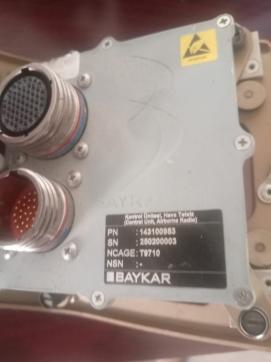
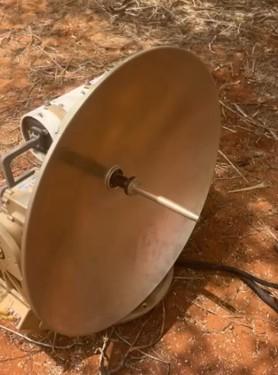
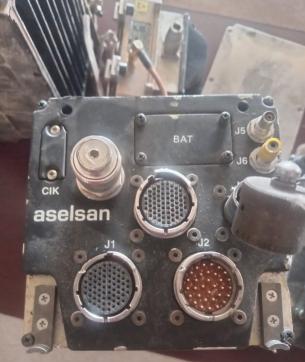
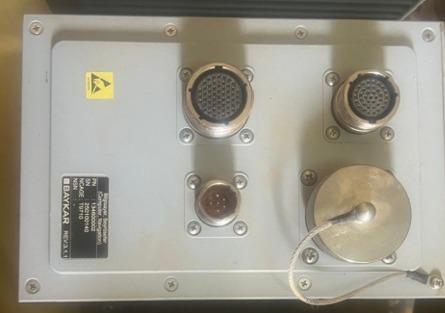
Figure 11. Manufacturer plates and major components recovered from the Akıncı wreckage. Select an image to enlarge it.
Strategic drones shot down
| # | Date | Location | Type | Launch site |
|---|---|---|---|---|
| 1 | Tuesday 17 March 2026 | El Obeid, North Kordofan | Bayraktar Akıncı | Bahir Dar, Ethiopia |
| 2 | Saturday 23 May 2026 | Ad-Damazin, Blue Nile | Bayraktar Akıncı | Bahir Dar, Ethiopia |
| 3 | Sunday 23 August 2026 | Dindiro, Blue Nile | Bayraktar Akıncı | Ethiopia |
| 4 | Monday 12 October 2026 | Wad el-Mahi, Blue Nile | Bayraktar TB2 | Ethiopia |
| 5 | Thursday 22 October 2026 | Bikori, Blue Nile | Bayraktar TB2 | Ethiopia |
Why a strategic drone points to a State
The Akıncı is not a militia weapon. It is a twin-engine strategic aircraft with a wingspan of about twenty metres and a take-off weight of around six tonnes. It requires a paved runway, a ground-control station, satellite communications, a supply chain of manufacturer-supported spare parts, and aircrews trained by the manufacturer. Türkiye exports it only to sovereign governments, under end-use undertakings.
Ethiopia is a declared operator. The Ethiopian Air Force received Bayraktar Akıncı aircraft in a public ceremony at Harar Meda Air Base in January 2024, in the presence of the Chief of General Staff, Field Marshal Birhanu Jula; it has operated Bayraktar TB2 drones since the Tigray war.14 The Rapid Support Forces possess no runway in eastern Sudan, no satellite ground segment and no Akıncı crews.
Finding B
Armed strategic drones of a type exported only to governments, and operated by the Ethiopian Air Force, flew from Bahir Dar Air Base to attack Sudan. Whether flown by Ethiopian crews or by a third State's crews using an Ethiopian air base, the attacks were launched from Ethiopia's sovereign territory and from a facility under its exclusive control.